Bessie’s Hope is a 501(C)(3) nonprofit. all donations are tax deductible

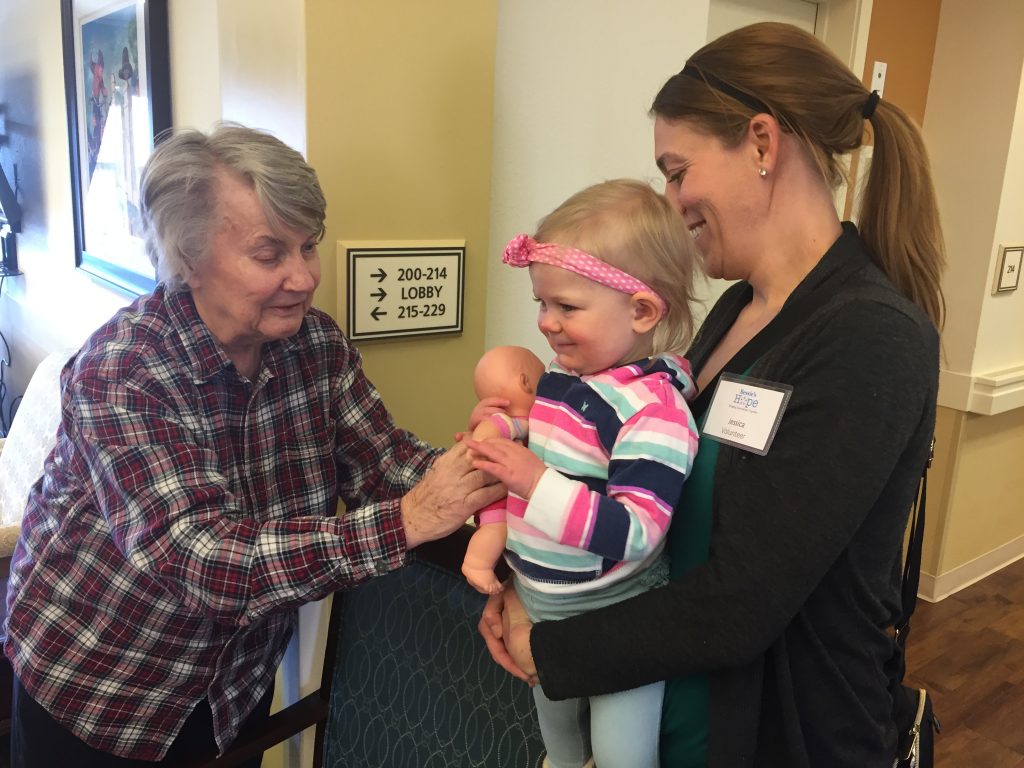
Family & Elder Program: Fesl Family Greenridge Place

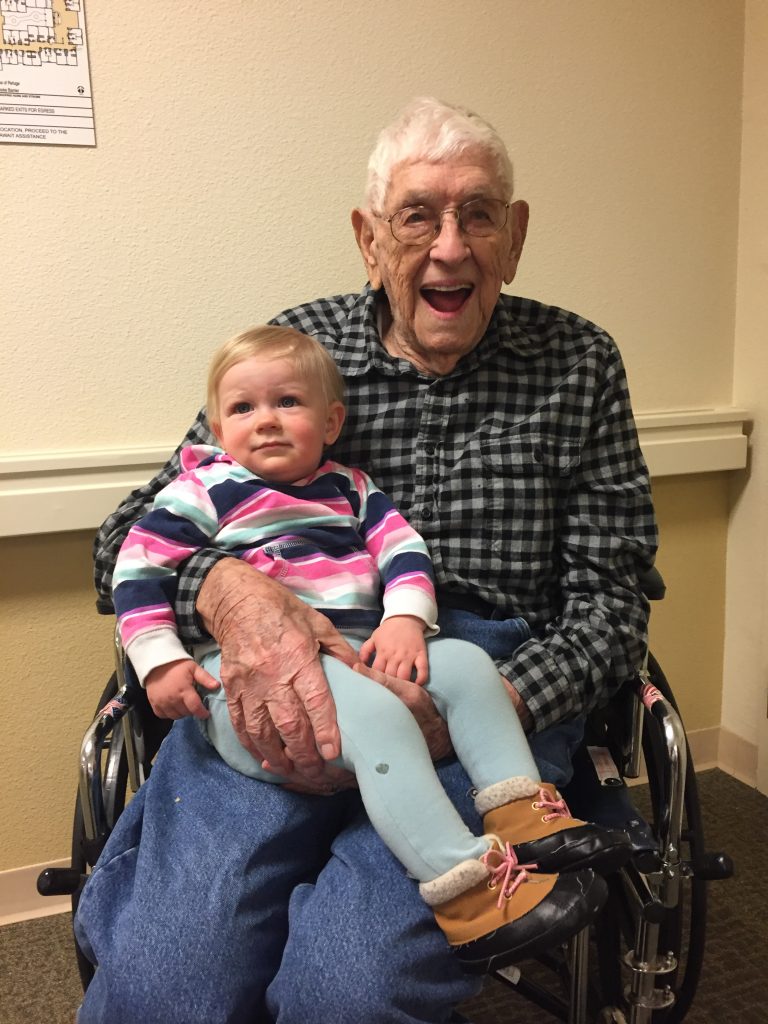
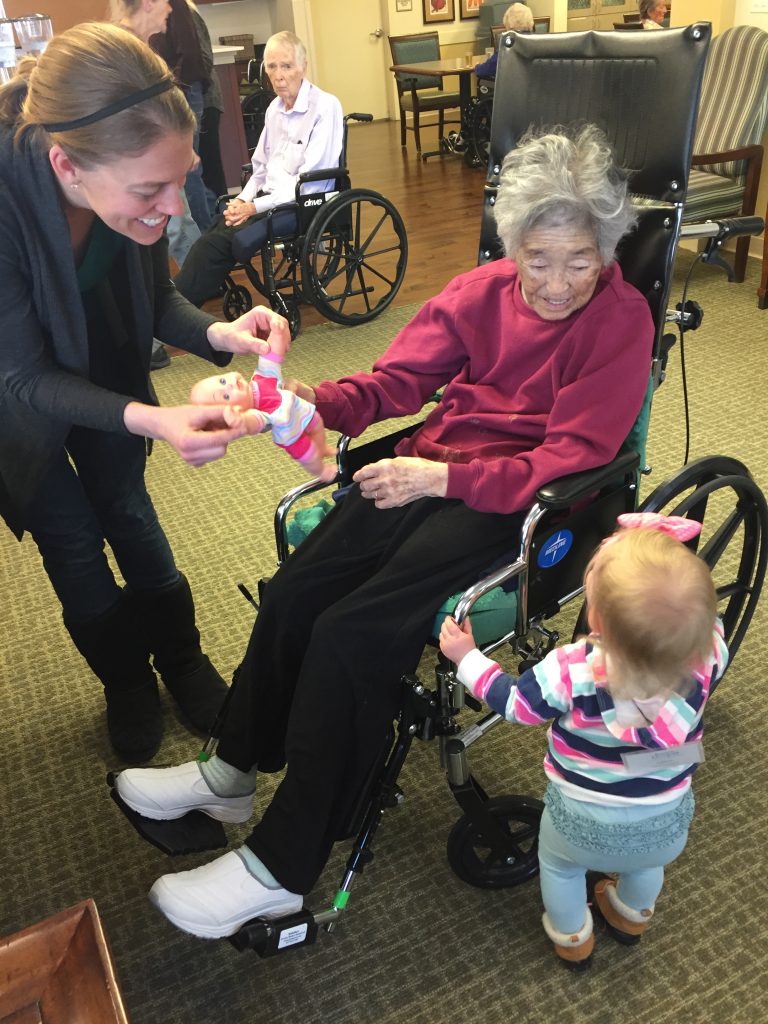
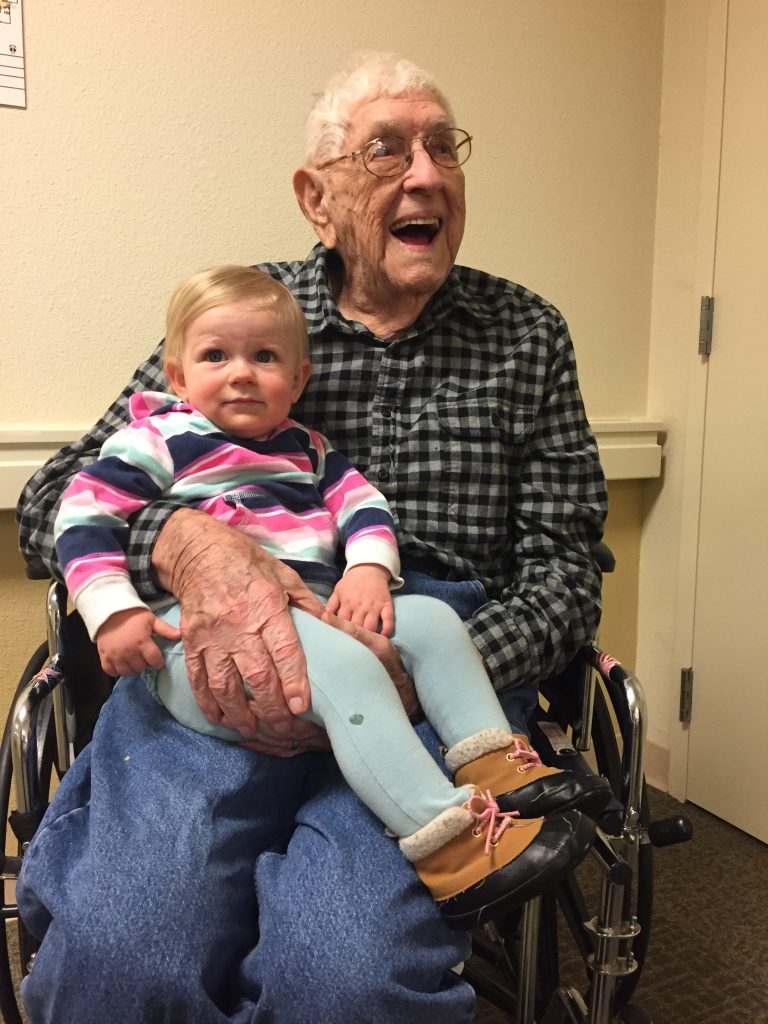
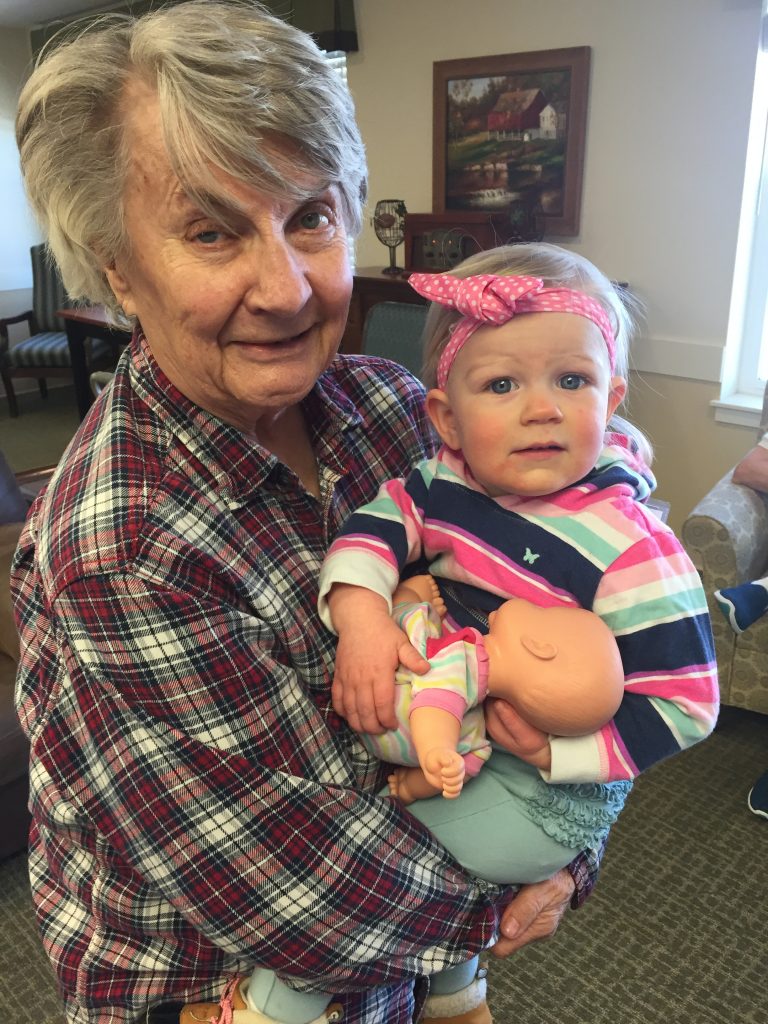
This month we celebrate the beautiful friendship between the Fesl family, Jessica and Elaine, and several of the elders at Greenridge Place.  These gals have been bringing joy to the elders for almost a year now and we appreciate their dedication, compassion, and time!

If you would like to enhance the life of a nursing or assisted living home elder in your area, please contact us and we’ll help you through the process.  Your efforts mean the world to these elders who have so much to offer. Click here to learn more about our Familiy & Elders Program.

Community & Elders Program: Pathways Church at Juniper Village Louisville

Pathways Church has been visiting Juniper Village Louisville for over a year now!  Twice a month, the group visits Juniper to offer fellowship and fun.  Led by Pastor Will Burger, the small but mighty group sings praise songs and chats with the elders on Sunday mornings to lift their spirits.

Elders and volunteers alike benefit from this interaction as they open their hearts to one another.  Juniper Village Louisville serves elders with Alzheimer’s and other memory disorders, so the offering that Pathways members give is very important!  Studies have shown that music can “evoke emotions that bring back memories” and “Music has the power to bring emotional and physical closeness.” in those living with dementia.  Our friends at Juniper Village Louisville and the wonderful volunteers of Pathways Church are building bridges to keep each other connected and we appreciate them very much!

Click here to learn more about how your company or organization can volunteer, too.

Colorado and Company KUSA-TV Oct 23, 2018

Come out to the 15th Annual Bowl-A-Rama fundraiser for Bessie’s Hope on November 10th. Whether you’re a pro or a beginner, there will be fun and prizes for everyone. You can head to Monaco Lanes, Littleton Lanes, or Brunswick Zone Westminster Lanes to support the fundraiser.

Community & Elders Program: Pinnacol Assurance at Chelsea Place

Pinnacol Assurance employees provided over 150 days of service in 2017! Bessie’s Hope is honored to have been selected by this community-service-focused corporation as a nonprofit to host a group of their employees this year.

We facilitated an educational training session and an elder group visit at Chelsea Place for 25 compassionate, fun Pinnacol volunteers. Smiles and warm memories were shared as the elders and volunteers danced to big band music and talked about their first dance partners. Many of the elders had married that very person! The joy continued as the Bessie’s Hope version of Charades lit up faces with laughter.

When it was time to say goodbye, the “Bessie’s Hope Friendship Train” gave the elders the opportunity to give and receive 25 hugs. Of course, we couldn’t resist one last dance before leaving! The Pinnacol group enjoyed lunch onsite, and the elder care volunteer experience concluded with a debrief session. When asked to describe the experience in one word, the resounding answer? “Fun!”

Thank you, Pinnacol Assurance and Chelsea Place!

Click here to learn more about how your company or organization can volunteer, too.


Youth & Elders Program: Denver Center for International Studies at Fairmont visits Cedars Healthcare Center

There is no greater joy than watching the faces of elders as young children enter a senior living space. Eyes light up, smiles begin to form and laughter quickly breaks out, as the youth bring their boundless energy and unbridled sense of merriment and wonder to the room.

This is especially true of our visits between the youth at the Denver Center for International Studies at Fairmont and the elders at Cedars Healthcare Center!   DCIS has been partnering with Bessie’s Hope for almost a year now, and after each visit at Cedars, we think an intergenerational visit couldn’t be better than this one!  They just keep getting better! The students arrive each time with stories to share, willing ears to listen, and lots of love to offer.

Do you know a school or youth group that needs to be a part of the Bessie’s Hope magic?  Click here to learn more about our Youth & Elders Program.

Family & Elders Program: Etta Veysey and Melba at Brookdale Highlands Ranch

After moving from Maine to Colorado, Etta Veysey yearned to be involved again with persons diagnosed with Alzheimer’s Disease.  Bessie’s Hope is grateful that Etta reached out to become a volunteer in our Family and Elders Program.   We asked her to share her story in our newsletter.

“My mother, three aunts and an uncle were all diagnosed with Alzheimer’s, and I spent much time with them during this time in their life.   I came to understand their fears, frustrations, and difficulties dealing with the disease.  My mother also was deaf and had macular degeneration, which added another layer of stress to her.

I decided that if I could bring some measure of comfort, encouragement, and joy to elders, that was my mission.  I searched the web for volunteer opportunities with nursing home or assisted living elders. When I saw the Bessie’s Hope site, I immediately knew this was the organization I wanted to volunteer for. I am so thankful to be doing this work and for such a wonderful organization!!

I have been so blessed from my visits with Melba!  I knew when I first met her that I wanted to really get to know her and develop a relationship with her.  In order to do that, I needed to visit her often and consistently.  It has been pure joy to get to know her and experience her great sense of humor, which makes for a lot of smiles and laughter when we meet!!  We both taught school and grew up in the country, so we have many memories to share with each other and opinions on teaching today!!!  I have learned a lot about shearing sheep and teaching in a one room school house!!

Sometimes Melba and I sing along with music or recite poems and nursery rhymes we remember from our teaching days!  This usually ends in laughter, as neither of us can usually remember all the words!! ,I have gained a very special and treasured relationship with one of the kindest, sweetest, and wittiest human beings I have ever met!  If I have brought her any measure of happiness, friendship, and comfort, then I am truly blessed!!

This week when I came in, Melba’s eyes lit up, she got a big smile on her face, and she started tapping on the table!  “Oh”, she said, “I had hoped you would come!  I am so glad you are here!”  That made my day.  I gain more from the visits than anyone!”

Click here to learn more about our Family & Elders Program.

The Impact of Intergenerational Programs on Youth

Intergenerational programs have proven, over and over, to be of great benefit to all ages involved, yet still, in the United States, intergenerational friendships are the exception rather than the rule: for the most part, age segregation prevails.

Kids spend their days at school, mostly among peers born the same year they were. Young and middle-aged adults cluster at work. And elders gather for clubs, classes, and meals that often expressly bar the young. Millions of college students and elders live in age-restricted housing, and most American neighborhoods skew either young or old.

As our society becomes more and more age segregated, there are fewer and fewer opportunities for the generations to come together, which creates more isolation and lack of understanding. That’s why intergenerational programs like those pioneered by Bessie’s Hope are so critical for a healthy and empowered society. Everyone benefits.

So far, this month, we have shared a lot about how these relationships can benefit elders’ emotional, mental, and physical health. But neither the need nor the benefits are one-sided. That’s why this week we are focusing on the endless benefits for today’s youth.

When people are raised in different time periods, their values and perceptions of the world can be quite different, and this can lead to difficulties in understanding one another. Therefore, one of the biggest risks when generations are separated from one another is the development of ageism and other prejudices and misunderstandings. [Learn more about ageism.]

Ageism is not just a threat to elders in our society, it effects everyone. Words like “investment” and “gain” are used when speaking about funding for youth and words “spending” and “drain” are used when speaking about funding for our elders. So many things, including the lack of exposure to one another, makes it easy for them to see one another as rivals or something to fear. When people of all ages get to know one another, they tend to unite around shared goals instead. When generations work together, this breaks down stereotypes, changes attitudes and lives, fosters mutual empathy, and improves communities. Intergenerational partnerships allow each group to see the other as valuable human beings with so much to share with each other.

The youth in these relationships are not just learning respect and empathy for others, they see role models for their own future. They are learning not just the value of other people, they learn to value themselves.

And there’s more. Interacting with older adults enables youth to develop social networks, communication skills, problem-solving abilities, as well as a sense of purpose and community service. Youth involved in intergenerational programs are
* 46% less likely to begin using illegal drugs.
* 27% less likely to begin using alcohol.
* 52% less likely to skip school.
* 33% less likely to hit someone.In short, intergenerational programs could be the best resource for the young people of today. Connecting generations is something that we at Bessie’s Hope feel honored to do for the elders, the youth, and all of society. Learn more about our Youth & Elders Program here.

Intergenerational Relationships and Elders with Dementia

Bessie’s Hope was founded almost 25 years ago to bring people of all ages into nursing homes, assisted living and memory care to build intergenerational relationships that enrich the lives of the elders, the volunteers and the community as a whole. Sixty percent of the nation’s nursing home elders receive no visitors. Thus enters the Bessie’s Hope volunteers who give a loving touch, a listening ear and a caring presence.

The discomfort toward to creating relationships with elders in long term care that is common among many individuals in our society is based in fear. Unfortunately, growing old is feared in our society, so avoiding spending time in elder care is a coping mechanism to limit our exposure to our own mortality and our own eventual frailty.  There is also the fear of emotional risk when we open our hearts to cultivate relationships with elders in long term care.

One of the biggest fears that people have about aging is the possibility of a loved one or themselves developing Alzheimer’s disease or other forms of dementia.  Dementia is a term that describes a group of symptoms associated with a decline in memory or other thinking skills severe enough to reduce a person’s ability to perform everyday activities.  The most common cause of dementia is Alzheimer’s disease, accounting for 60 to 80 percent of cases of progressive dementia. Vascular dementia is the second most common dementia type, and there are many other conditions that can cause symptoms of dementia, including some that are reversible, such as thyroid problems and vitamin deficiencies.

Dementia is often incorrectly referred to as “senility” (from the latin word meaning “old man”), which reflects the formerly widespread, but incorrect, belief that serious mental decline is a normal part of aging.  It is estimated that only 1 in 6 women, and 1 in 10 men, who live past the age of 55 will develop dementia in their lifetime.  Many issues can cause decline in memory or thinking skills that impact people of all ages.

Our own familial elders and the elders in long term care are treasures, including those with Alzheimer’s Disease.  Even as their lifetime of acquired wisdom may be lost, their ability to love and to be loved only grows.

“The greatest thing you’ll ever learn is just to love and be loved in return.”

-“Nature Boy” by eden ahbez

The vast research accumulated to explain cognitive and functional retrogenesis helps us understand the process of Alzheimer’s Disease as a reversal in the order of acquisition in normal human development.  The final stage in the disease progression mirrors the developmental level of “birth to age 2”.   Research also proves how valuable the relationships between small children and elders who have Alzheimer’s Disease.  (pic with Ruby and Bryan) Just as the children, our elders with Alzheimer’s need our love, our patience, our praise and our recognition of their being very special human beings. Bessie’s Hope works hard to instill within youth and adult volunteers that these elders, like all elders, need and deserve to be treated with dignity and respect.

The reason Bessie’s Hope has such successful intergenerational programs is the education, training and activity development, which ease the fear and “stage fright” for volunteers of all ages and give them the skills for cultivating mutually rewarding relationships.  Interacting comfortably with individuals who have dementia requires different approaches than what many volunteers are used to.

“Those with dementia are still people and they still have stories and they still have character and they are all individuals and they are all unique. And they just need to be interacted with on a human level.”

– Carey Mulligan

At Bessie’s Hope, we have developed several tips and guidelines for those entering into intergenerational relationships for the first time.  Here are a few tips from our training materials:

  • If someone is argumentative, insulting, angry, or cursing
    • Give them the patience and unconditional love they deserve. Whenever you are dealing with a person with dementia, remember the person, not the disease.  When dealing with a challenging behavior, remember it is the disease, not the person.
    • Do not judge the person. We have no way of knowing the pain (physical and emotional), confusion, fear, or sadness they are feeling.  Remember, part of dementia is a loss of the ability to communicate effectively.
    • Do not take insults or threats personally. In the reality of a person with dementia, you might represent a completely different person or time. Remember they are not trying to give you a hard time; they are having a hard time.
  • If someone talks to you as though you are someone else that they may be remembering in a different time or place
    • This memory is very real. Even though your understanding of reality is different from theirs, theirs is equally “real.”
    • If it seems to be a pleasant or comforting memory, just be in their reality with them. If you are lucky enough to share this space and the people in it with your grandpartner, consider yourself blessed.  It is the closest you will ever get to traveling to another time.
    • Do not attempt to reason or to dispute the reality that person is in. Your goal is not to bring them into your reality, but to make join in their reality.
    • One of the easiest ways to rob a person of their dignity is to be dismissive. Remember, this also applies to individuals who have dementia.  Never talk through, over or about them as though they aren’t there. Include, involve, and respond as though you understand, even when you don’t.
  • If you are asked questions like “When is my wife coming?” or “Is it time to go home?”
    • Be validating and not dismissive or corrective. Once again, you need to exist in their reality.  Even if the person they are looking for passed away, that is not where their head and heart are right now.
    • Gentle deflection may be necessary. “I’m not sure.” “I’ll check on that for you.”
    • Respectfully change or redirect the conversation. “I’m not sure when she will be here. Do you remember the last time you saw her? Tell me about how you met.”
  • If someone in advanced stages of dementia makes no attempt at communication
    • Loss of communication is part of dementia, but that isn’t the same as loss of consciousness. They may be sitting with eyes closed or blank stares, but in their minds they could be small children or even babies.
    • Even those who can’t speak can often hear. Talk to them, sing to them, share with them.
    • Don’t forget about the power of touch. [We will have a future blog post on this topic alone.] A gentle touch, a caress of their hair, rubbing their arms or shoulders, holding their hand – all these offer a feeling of security.
    • Music can be enjoyable to them. You may see a nonverbal resident moving a hand or foot or their head to the music.  And contrary to myth, the music does not have to be slow.  Ideally, the music is familiar and meaningful for the elder.

I’ve learned that people will forget what you said, people will forget what you did, but people will never forget how you made them feel.

-Maya Angelou

We have been talking about our elders with dementia and how you can support them.  But if you have been following our series for Intergenerational Month, you know that whatever we give the elders, we get much more in return.  Next week we will be continuing our series by discussing the benefits intergenerational relationships have on our youth volunteers.  If you would like to learn more about our programs and how you can get involved in an intergenerational friendship yourself, check out our website.


The Forgotten & Invisible

“Do not cast me off in the time of old age;

Do not forsake me when my strength fails.”
-Psalm 71:9

Who are the elders that Bessie’s Hope serves? They are the heroes that who fought in World War II, the Korean War, the Vietnam War, who championed the civil rights movement, who stayed home and raised their families. They baked our favorite cookies, patched up our scrapes and kissed our bruises when we fell. They are our parents, grandparents, dear relatives and friends who have imparted their wisdom, candor and values to us so that we could build our own lives and families. Who we are as individuals, communities, and a global society is the direct result of the foundations they have laid and the trails they have blazed.

Where are they now? While we’d like to think they’re enjoying their “golden years,” thousands of them are living alone in nursing homes and long-term care facilities right in our own neighborhoods. While these are skilled facilities with caring staff, they can also be lonely and isolating places for our elders who are without family visits.

A staggering number of our elders— even those with family — spend weekends, birthdays and even holidays by themselves, alone with their memories, although surrounded by staff and other residents. This is the “forgotten” and “invisible” population in our society. For most of us who are going about our busy lives and in good health. We don’t often think about aging. But consider the following:

  • The Population Reference Bureau has estimated that the number of Americans over the age of 65 will increase by 75% between 2010 and 2030 from 1.3 million to 2.3 million.
  • One third of the baby boomer population have not had children during their lives. This does not include those who have lost their children during their life or for whom their children, for various reasons, cannot provide care and support for their aging parents.
  • According to the National Center for Health Statistics, more than 50 percent of nursing home residents have no close relatives, and 46 percent have no living children.
  • An estimated 60 percent of nursing home residents never have visitors.

Sadly, many in this population rarely leave the nursing home premises. Medical challenges, disability and the death of close friends and loved ones take a gradual toll on their mental and emotional health and well-being. Limited social contact only exacerbates the problem. It’s no wonder that depression among the elderly is rampant.
This population also has simple, more basic needs, which if fulfilled, often eliminate the bigger needs. A happy, satisfied person is a healthier person. Studies show people who live longer and healthier lives have strong support systems that keep them motivated.

Bessie’s Hope has seen the difference on-going socialization and relationships can have first-hand. Bessie’s Hope intergenerational programs afford elders an opportunity to participate in meaningful activities, form new relationships and feel connected with the community. This decreases loneliness, boredom, and depression while increasing self-esteem. A report on Alzheimer’s disease and related dementia prepared for the Department of Veterans Affairs sites that intergenerational activities have been linked to increased social behavior. In 2017, 92% of residents reported that Bessie’s Hope volunteers added joy to their lives and helped them feel wanted and important.

Also, Bessie’s Hope programs have a positive effect on the residents’ health. Research proves that kindness increases serotonin (an important “feel-good” hormone that creates a feeling of well-being in us) levels. When serotonin levels increase, the immune system is strengthened. Participation in pleasurable activities or activities that induce pleasurable memories increase immune system efficiency by releasing endorphins which increase the proliferation of T Cells (the main soldiers of the immune system).

“We are not victims of aging, sickness and death. These are part of scenery, not the seer, who is immune to any form of change. This seer is the spirit, the expression of eternal being.”
-Deepak Chopra


Our seniors have given us much and can still teach us many things. Treasure them, what they have achieved and how far they have come in life. And most important, reach out to them and show them that we still care and that we have not forgotten.

Learn more about us on our website and watch for more in our Intergenerational Month series each Wednesday in September.

The Importance of Intergenerational Programs

“Connections between generations are essential for the mental health and stability of a nation.”
Margaret Mead


If you think about the people you know from different generations, you are likely thinking about your family; your parents and grandparents, your children and grandchildren, your aunts, uncles, nephews and nieces. The story of intergenerational relationships, therefore, is the story of families. As society has changed and evolved, so too have family ties changed over time. Today, in addition to the traditional familial unit, families exist in many different forms such as single parent, grandparent-grandchild, childless, same-sex couples, and “step” and “blended” families. Families differ also in their housing and living patterns. These changes call for new definitions, new relationships, and a new way to make these essential connections.

Consider elders in nursing homes and assisted living communities. People who move into a nursing home experience change in social status, loss of autonomy, the feeling of having no place to call home, change in social contacts, and the reduction of activities – all of which endanger their identity. Nursing home residents want to feel part of society and remain in contact with family members and friends, maintaining social contacts. Contact between many nursing home residents and their families becomes rare after they move for many reasons: lack of interest, a general avoidance of topics of disease, and geographic separation. In fact, 60% of nursing home residents receive NO personal visits. Although nursing home staff strive to provide the support and relationships that elders need, it is a challenge that is frequently beyond their ability, as many are overwhelmed with administrative tasks and providing basic medical care.

Bessie’s Hope was founded in 1994 by Sharron Brandrup, Linda Holloway, and Marge Utne to address this need, and they quickly discovered the power of intergenerational programing. Bessie’s Hope intergenerational programs afford elders an opportunity to participate in meaningful activities, form new relationships and feel connected with the community. In doing so, Bessie’s Hope remains unique as the only organization in the US that proactively brings people of all ages and backgrounds together in this life-transforming way, in work that does have the power to strengthen the very fabric of our society with threads of empathy, compassion and respect.

Today, almost 25 years later, Bessie’s Hope volunteers visit thousands of nursing home and assisted living residents each year. [Learn more about the Intergenerational Programs at Bessie’s Hope] The success of our programs is based on the following:

  • Education and Training – Youth and adult volunteers receive education regarding aging, dementia and nursing home life. Their training includes communication tools, which prepare youth, group leaders, families, adult groups and individual volunteers to have meaningful interaction with elders of all levels of cognitive functioning, including advanced Alzheimer’s disease.
  • Activity Planning – Bessie’s Hope staff guide activity planning to ensure that all activities are age and capability appropriate. Activities are also integrated into the school’s academic curriculum and into the youth group’s objectives.
  • Relationship Building – Because of the structure and frequency of the visits, Bessie’s Hope programs cultivate mutually rewarding relationships between the elders and volunteers of all ages.

We see the successes of these programs every day in the elders that we serve. Loneliness, boredom, and depression are decreased, while self-esteem and social interaction are increased. A report on Alzheimer’s disease and other forms of dementia prepared by the Department of Veterans Affairs sites that intergenerational activities have been linked to increased social behavior. In 2017, 92% of elders of varying cognitive levels reported that Bessie’s Hope volunteers added joy to their lives and helped them feel wanted and important.

“For me, bringing the young and old together like this, is not just a pleasure, it’s a necessity.”
A 96 year-old participant

Also, Bessie’s Hope programs have a positive effect on the residents’ physical health. Research proves that providing or receiving kindness increases serotonin (an important “feel-good” hormone that creates a feeling of well-being) levels. When serotonin levels increase, the immune system is strengthened. Participation in pleasurable activities or activities that induce pleasurable memories increase immune system efficiency by releasing endorphins which increase the proliferation of T Cells (the main soldiers of the immune system).

The elders aren’t the only ones who benefit from intergenerational programs created by Bessie’s Hope. Research shows that children need four to six involved, caring adults in their lives to fully develop emotionally and socially. In general, children develop higher self-esteem, better emotional and social skills (including an ability to withstand peer pressure), and can even have better grades in school. The involvement of a reliable, caring adult helps children develop life skills, and builds self-esteem and confidence. One study showed that when a child is mentored by an adult, they are: 46% less likely to begin using illegal drugs; 27% less likely to begin using alcohol; and 52% less likely to skip school.

“I love Bessie’s Hope, because the elders tell me to stay in school, and they really care about what I’m doing with my life. They’re like my inspiration.”
A 16-yr old participant from an “at-risk youth program”

Children feel special in intergenerational relationships. Children know that being with their Bessie’s Hope “grandpartners” is special. They experience an unconditional type of love that’s not easily found elsewhere. Through sharing in an older adult’s interests, skills, and hobbies, children are introduced to new activities and ideas. Through their life experience, older adults can often bring with them a tremendous amount of patience. Knowledge, skills, and attitudes children pick up from elders tend to stay with them through life more than those picked up from other sources.

Young people become more comfortable with aging when they have many models for adulthood, and older adulthood. This not only helps combat ageist stereotypes [learn more about ageism], but allows children to see a trajectory for the whole of their lives and make connections between what they do and learn now to how they will succeed in the future. Research shows that “planful competence” – the ability to understand the life course and work toward goals – is key to student success in school and in life.

Children aren’t the only learners in our society. Young and old can fulfill the role of student and teacher for each other. Children like to feel needed, and they can share with the elders information about technology, new practices in education, and information on popular culture. Children can also help older people, particularly those facing health challenges or other losses, see the world anew again, through a child’s eyes. Elders have an opportunity to leave a powerful legacy, to make a difference. They can send a message into the future through a young friend. Relationships across generations can fulfill our desire for immortality.

As these relationships grow, the impact can be seen rippling throughout the community with the result being a better quality of life for everyone. Imagine the strength of a community in which all generations support each other. Communities become more than neighbors, but family. And when everyone around us is part of our family, we no longer have to fear that our evolving society will leave anyone behind.

“Show me any social problem and I’ll show you an intergenerational solution,”
Shannon Jarrott, PhD, a professor of social work at Ohio State University.

Therefore, intergenerational programs are not a luxury; they’re a necessity. When we weave all ages into the fabric of our lives, we’re left with a much stronger society.
Bessie’s Hope will continue to stand at the forefront of the Intergenerational Programing movement. Learn more about us on our website and watch for more in our Intergenerational Month series each Wednesday in September.