Bessie’s Hope is a 501(C)(3) nonprofit. all donations are tax deductible
Bessie’s Hope is a 501(C)(3) nonprofit. all donations are tax deductible
What is Ageism?
Ageism is the stereotyping, prejudice, and discrimination against people on the basis of their age. Ageism is widespread and an insidious practice which has harmful effects on the health of older adults.
In America, ageism is prevalent because western cultures tend to be youth-centric, emphasizing attributes like individualism and independence. However, many other cultures are less prone to ageism. For instance, respecting the elders is part of the actual law in China. The Japanese culture values the elders. Appreciation for elders has been ingrained in families and their children, making Japan one of the kindest places in the world for seniors. Older people are valued as assets in Scotland. Their voices are heard, and they are supported to enjoy full and positive lives in family settings.
How does ageism affect older adults?
Age discrimination can be very hurtful to the self-esteem of aging individuals and can even take a toll on their health. Many seniors are treated like second-class citizens by younger generations. They are often talked down to or even made to feel invisible because of their age.
A 20-year study on perceived age discrimination, by Becca Levy, PhD, found that 63% of participants over age 53, reported feeling discriminated against, with the main cause cited being their old age. The study also found that age discrimination quickly leads to feelings of depression and stress and causes lowered mental health as well as lower self rated health, and when older individuals were exposed to positive stereotypes about their age they showed significantly better memory and balance than those exposed to negative views. What is even more astonishing is that seniors with positive perceptions of aging live 7.5 years longer than those with negative views.
How to recognize ageist comments?
If left unchanged, ageist comments can erode the self-confidence of older people and make them feel ostracized. So how can we learn to recognize ageism and how do we avoid it? Here are some ageist words, phrases and non-verbal cues that should be avoided.
1. Offensive Descriptions and adjectives. Avoid these words because they are plain mean and hurtful.
Old hag, old-timer, little old lady, old coot, over the hill, old foggy, decrepit, ancient, biddy, codger, crone, fossil, geezer, old fart, old goat, prune, senile old fool, eccentric, feisty, spry, feeble, grandmotherly, grandfatherly and vegetable.
2. Seemingly kind but still offensive endearments. Older people don’t like being treated like babies. They are still mature individuals who deserve respect. Instead of calling them sweetie, honey, dear or young lady, call them by their names Ms. Smith or just plain Judith.
3. Generalization. As much as we don’t want to be stereotyped by our race, ethnicity or our gender, or be lumped into one description such as “all millennials are apathetic” or “all baby boomers are junkies”, we shouldn’t generalize older people by what other older people can and cannot do, what they have and don’t have.
“Old dogs can’t learn new tricks.”
“Old people are perpetually out of touch”
4. Uncharacteristic for their Age. Though sometimes it may be hard for them, older people can still learn and do new things. When they are treated like they shouldn’t be able to do some things, it’s also ageist.
“A quick-witted 85-year-old”,
“An agile 75-year-old”,
“Feisty old lady”,
“Wow! She’s 78 and still takes online classes.”
“This little old lady still parties like a college kid.”
“He is 80 years young.”
“Can you believe she’s 60 years old?”
“60 is the new 30.”
5. Assuming they’re weak. Comments like the following, though said with good intentions, suggest they shouldn’t be able to do certain things because they’re supposed to be fragile. Not all older adults are weak. Some even maintain physical fitness up to a hundred. Saying something like this just reminds them of the imminent decline of their health.
“I’m so glad you’re still up and around!”
“You’re still agile! How’s your health?”
“You shouldn’t be doing that.”
6. Lying in good faith. We are all aging and everyone is older than someone. It someone says they’re not old when they are relatively older to others, instead of it being a compliment, it becomes a reminder o the stigmas that aging bring. Deceiving older people won’t make them any younger.
“You could pass for much younger.”
“Oh, you’re not old.”
6. Oversimplifying words. This is when we assume that all older people have problems with understanding so we tend to speak in very simple words, like teaching a child how to talk. At times, we also over explain things that don’t need explaining. Remember that older people are not mentally slow. According to Gerontology Society of America (GSA), we don’t need to change our speech and vocabulary to communicate with older adults. “Older adults maintain their existing vocabulary or continue to improve it,” wrote GSA. “They have no problem understanding complicated words that members of other groups, there is no need to simplify words to use.”
7. Speaking to others about an older person’s situation when he or she is in the same room. Aside from being plain rude, people assume that older people cannot understand their own situation and that another person (maybe younger) is required. Doctors and health care providers usually commit this mistake. If there is someone else accountable in the area, doctors pretend older adults are not there.
8. Jokes. Every time when a person is joking about older people, he or she is actually disguising emotions and thoughts, deliberately or subconsciously about the horrors of aging.
“Grandma is so wrinkled she needs a bookmark to find her mouth.”
“My old Uncle Ed still whistles at girls but can’t remember why.”
Ageism Part 2
Helping Break the Cycle of Ageism Can Lie in the Hands of Today’s Youth
In today’s society there is a prominent focus on ageism, healthy aging and improved quality of life for the aging population; however, the focus does not extend to those who are living in nursing homes. Six out of ten Americans would rather die than to have to live in a nursing home; however, hundreds of thousands of the 65+ population do reside in a nursing homes. The resistance of not wanting to live there could be that the perceptions of nursing homes is that they are just places people go to die, and are populated with those who have little left to give. That simply is not true.
Society must realize just because someone lives in a nursing home, it does not mean that they have given up the desire to learn, feel valued, contribute to society, and live the rest of their lives with dignity and a sense of meaning. Just because they have a roof over their head, are fed and receive health care, doesn’t mean that society should assume that their needs are being met.
In a research study titled “Does Intergenerational Contact Reduce Ageism?” the authors, Julie Christian, Rhiannon Turner, Natasha Holt, Michael Larking and Joseph Cotler, found evidence that “youth who have contact with the elderly can break stereotypes and instill positive attitudes toward aging and the elderly. Participants need to have time to get to know one another so that there is potential for empathy, to disclose personal information and to work on communication so that the interactions are comfortable.” This description of successful intergenerational programs perfectly.
The Bessie’s Hope youth are taught that the elders with whom they will be cultivating relationships are the individuals upon whose knowledge, skills, talents and hard work our communities were built. Also that the elders have amazing life stories to share, but there is no one to listen. Our youth are eager to listen and learn from them, because of our training. This is important because the residents like telling stories from former times again and again because they live in a world of memories from the past. These stories, which stabilize identity, are important as the elders generate their sense of living from their reflection of the past.
The following are quotes from Bessie’s Hope youth participants:


Mike Bucher and Angela Schreffler have been volunteering with the Family and Elder program for almost a year. They were fortunate to have been matched with two roommates at Forest Street Compassionate Care, Clyde and Adib. Mike and Angela visit the two men once a week and have been enriched by the experience.
Adib is a quiet, thoughtful, and inquisitive conversationalist, who loves to swap fun facts with Mike. He has shared his experiences of living all over the country and loves to speak about his Muslim faith. Clyde is kind and content, and he enjoys sharing stories about his childhood, including memories of his parents and siblings.
Mike and Angela started volunteering with Bessie’s Hope after Angela’s father became very ill and spent the last five months of his life in a nursing home. When visiting him, they were struck by how many individuals in the facility never came out of their rooms and didn’t seem to have any visitors. Having worked in nursing homes in high school and college, Angela realized how wide-spread this issue and both agreed that they wanted to help make the life of an elder a little less lonely and isolating.
Mike and Angela consider their visits with Clyde and Adib to be the highlight of each week! Each has learned so much from their time with the men, both individually and as a married couple. Bessie’s Hope has connected them to two individuals who have become part of their family.
If you would like to learn more about our Family & Elders Program, click here.
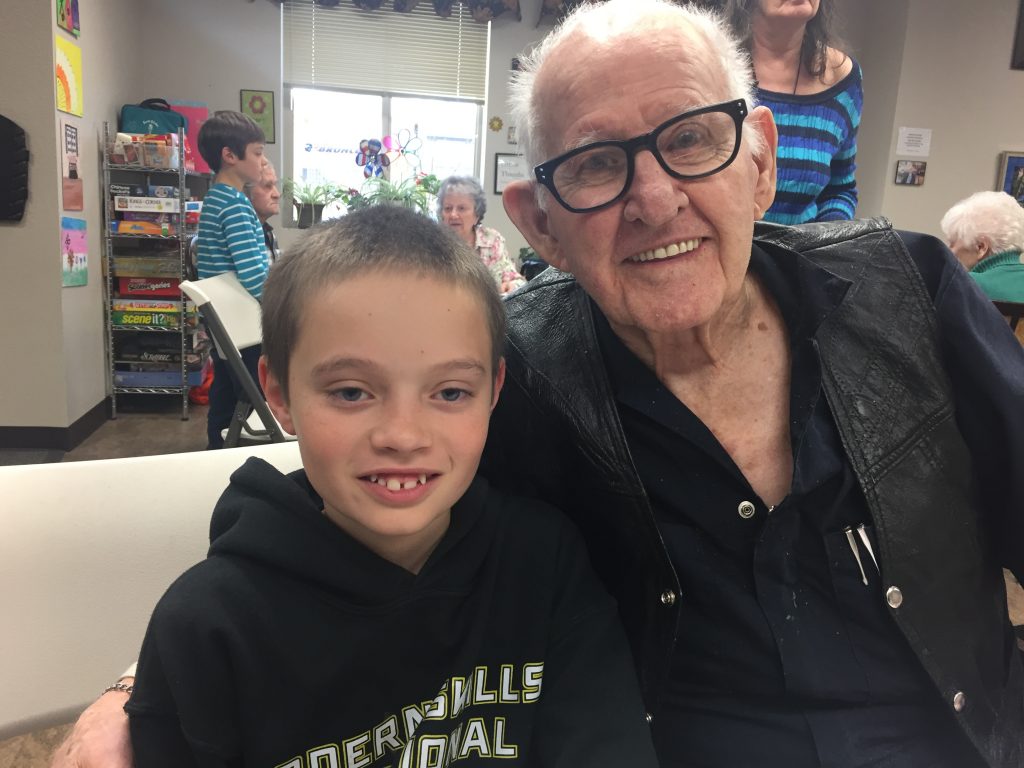
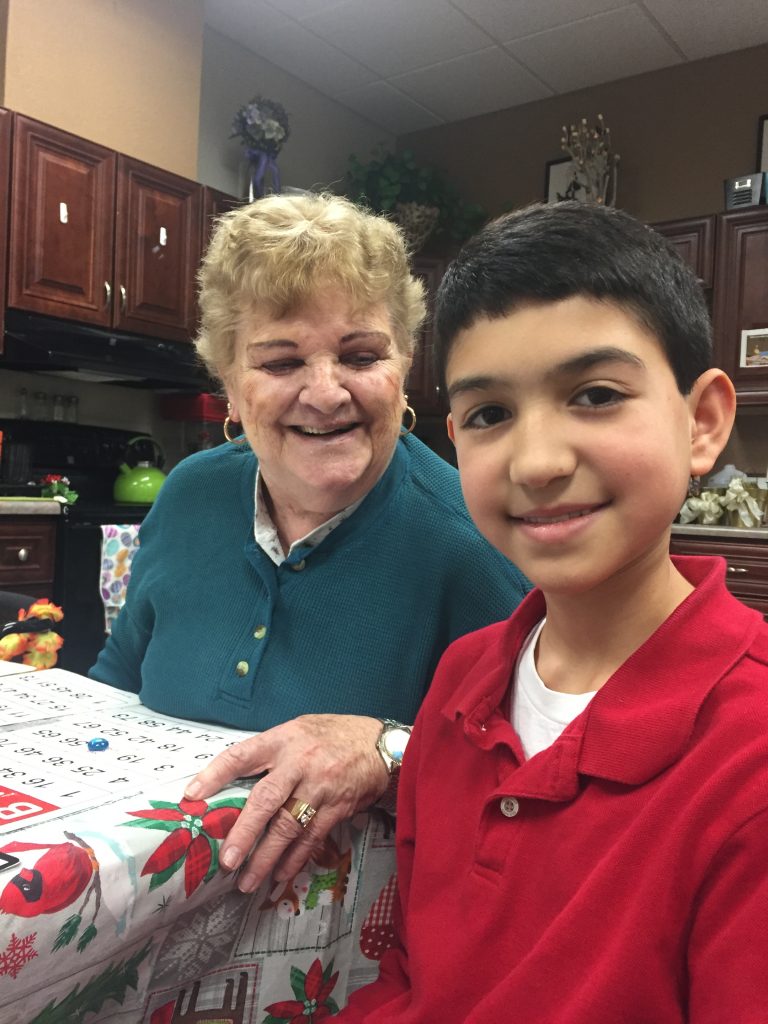
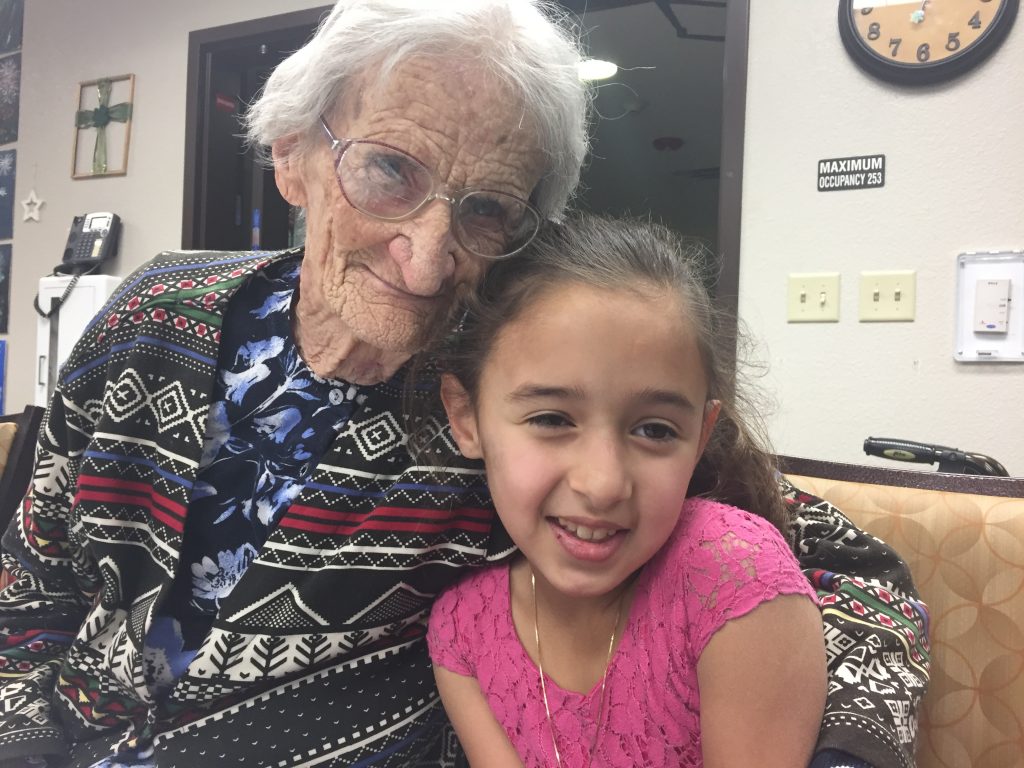
 Students from McAuliffe International School have been visiting Rosemark at Mayfair for over a year, sharing stories, creativity and laughter with one another. The youth and elders alike have benefited immensely from the joy of relationship-building.
Smiles beamed, feet tapped and hands clapped as the 7th graders recently revived their production of Once on This Island for the residents. Studies have shown that music can shift mood, manage stress and stimulate positive interactions for our elders. The youth spoke afterward about how they, too, felt transformed. One student exclaimed, “I can’t believe how happy that made me!”
Life-enhancing experiences like these happen all the time with Bessie’s Hope because we ground our work in education and training volunteers of all ages.


 Bessie’s Hope has had an alliance with Mile High Youth Corps for several years. The service-oriented organization was set up at about the same time as was Bessie’s Hope. They are a youth development agency dedicated to career and college readiness, self-improvement and job skills.
Their corps members have been some of our most treasured volunteers. They have visited literally hundreds of residents in many of Bessie’s Hope’s elder care community partnerships. The combination of youth wanting to make a difference and elders open to those youth is profoundly beneficial for all involved.
The Bessie’s Hope system provides the education and structure to make the initial discomfort much more comfortable. The music and activities add the fun factor. The result is connection and appreciation regardless of outer differences.
Another factor in our success with MHYC is the compassion and willingness of their group leader, Ms. Sierra Cashion. She has been a champion of this intergenerational work and we wish her well.
Our enthusiasm to work together – Bessie’s Hope and Mile High Youth Corps – continues, with the knowledge of future success!


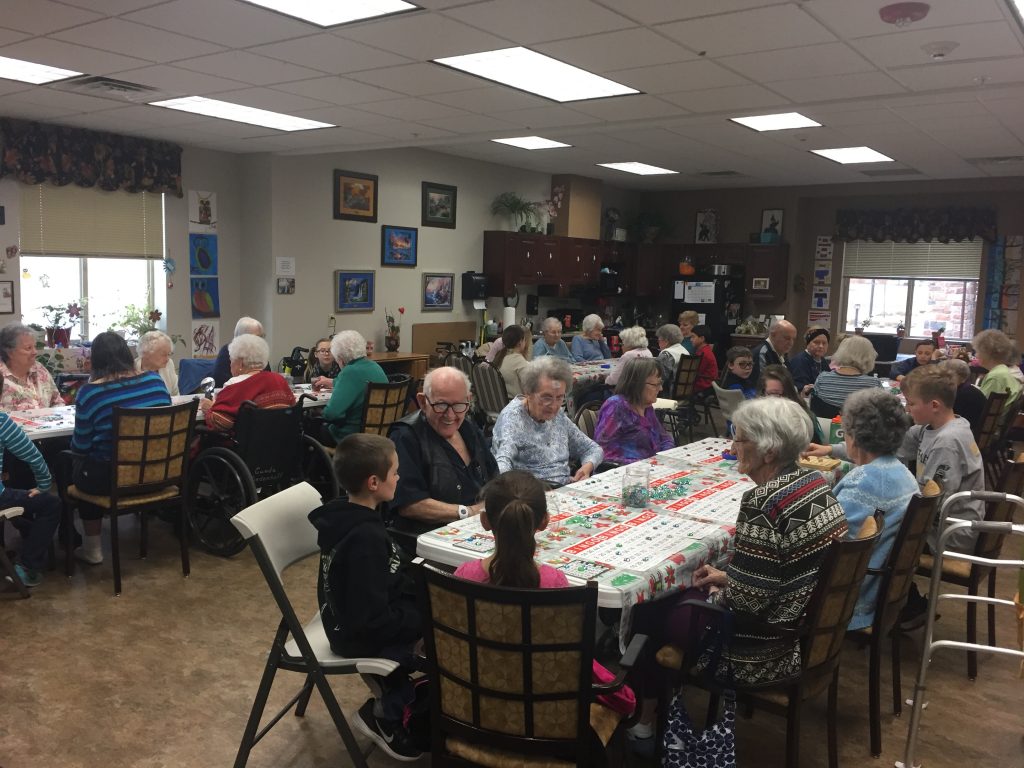
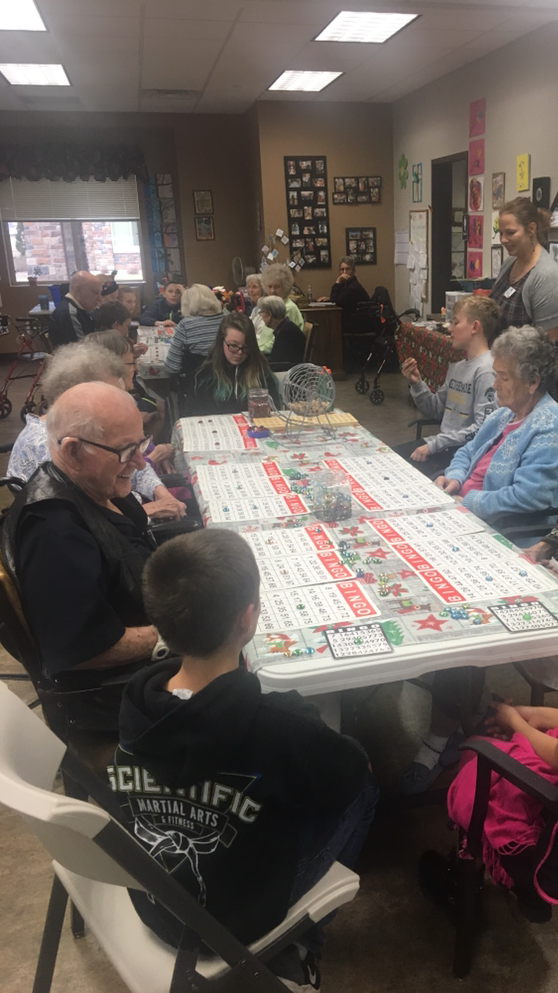
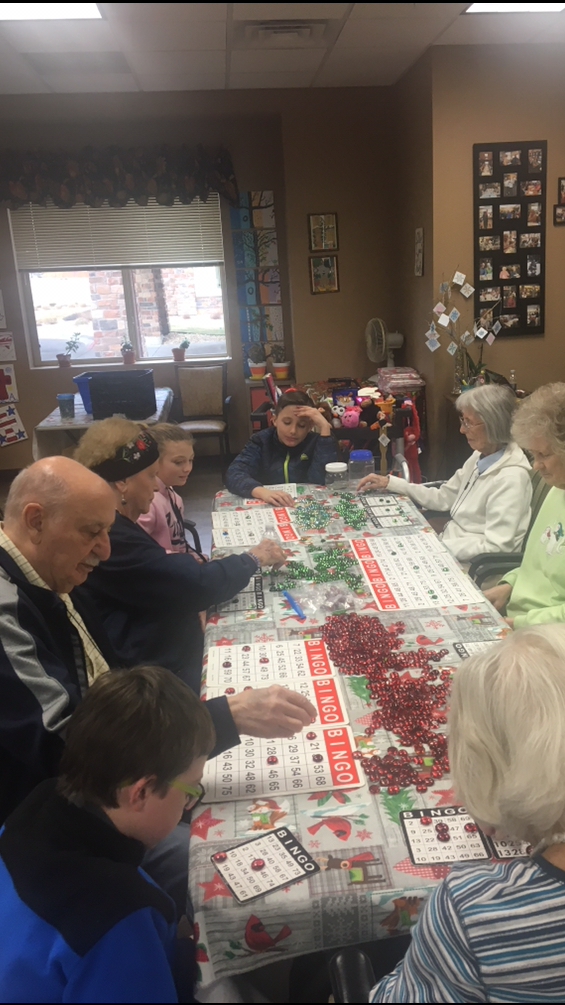
Youth and seniors in Brookdale Highlands Ranch, an assisted living home that provides memory care, come together for crafts on March 15, thanks to Bessie’s Hope, a program that coordinates visits between volunteers of all ages and seniors.

Brookdale resident Kaz Denkenbeiger, left, makes a puzzle with Edie Cingrani, a student at Mountain Ridge Middle School. The two came together because of Bessie’s Hope, a program that coordinates volunteers with seniors in assisted living centers.


Nancy Blizzard has been volunteering in the Bessie’s Hope Family and Elders Program at Chelsea Place in Aurora.
She regularly visits several women, and she also tries to introduce herself to new residents while she is there. When asked how the volunteer experience has added to her own life, Nancy says, “Making new friends is always a blessing. You can’t have enough friends.”
“This program provides the elders with someone to talk to and connect with on a personal level. Whether you are just talking with them or playing a game, they appreciate your kindness and friendship.”
To learn more about the Family & Elders Program, click here.

For several years, Bessie’s Hope has been honored to receive funding from St Gabriel the Archangel Episcopal Church. Bessie’s Hope Board member, David Geras, introduced the church to the work of Bessie’s Hope. We are very grateful for the financial support from the church, and we are also so grateful that Nina Stasser was interested in initiating a monthly group visit with Bessie’s Hope to a nursing home.
Nina and Dana Thompson are the Group Leaders, and they have gathered other fun, compassionate women to join them in bringing joy, music, hugs, crafts, friendship, dancing, laughter each month to residents at Orchard Park Health Care Center. Nina and Dana are hopeful that the group from St Gabriel will grow and will continue for years to come.
Every nursing home is filled with wonderful people who have wonderful stories. Bessie’s Hope would love to have more groups of volunteers like this to go listen to the stories and share joyful times with the elders.
To learn more about the Community & Elders Program, click here.


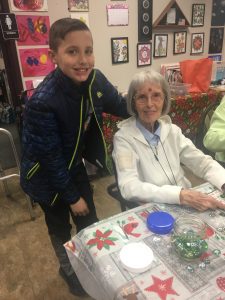
Gethsemane Lutheran School has partnered with Bessie’s Hope for many years to provide the beautiful experience and joy gained from service to others, and to give the youth the opportunity to cultivate mutually rewarding relationships with the elders. During the course of each school year, students from 1st through 7th grades participate in the training and in the visits with the elders.
To learn more about the Youth & Elders Program, click here.